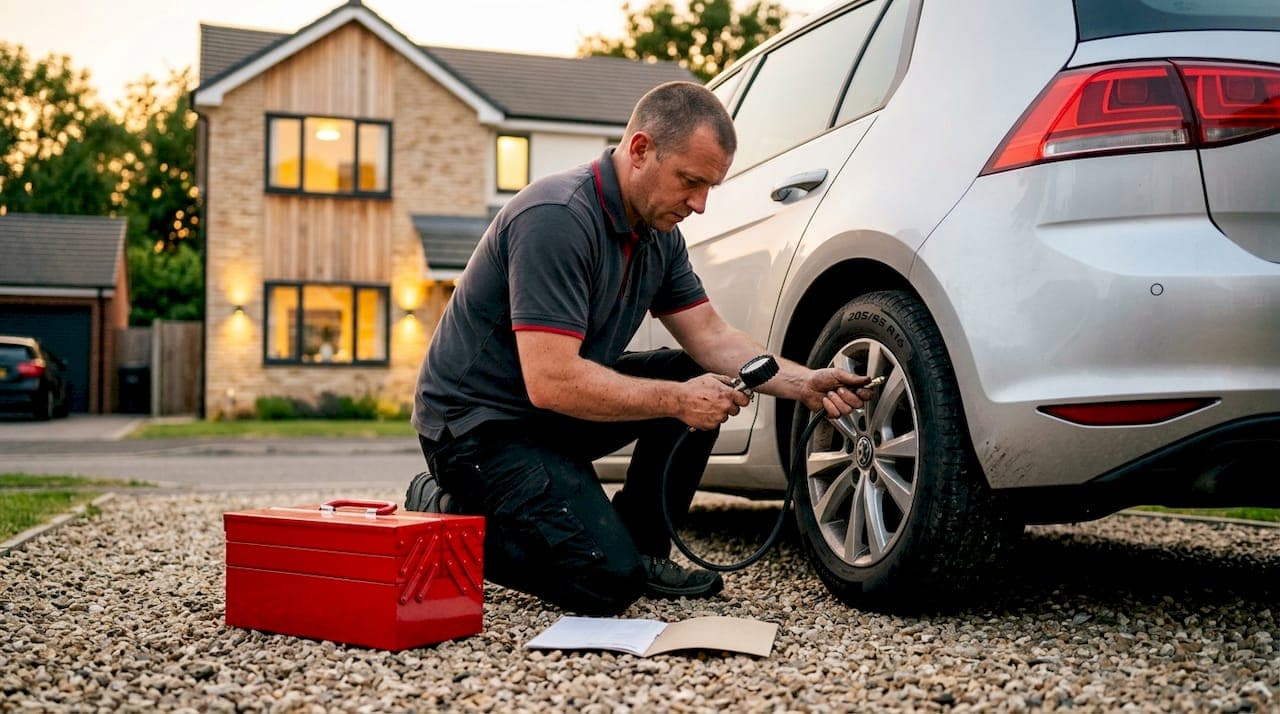
Car service at home is defined as professional vehicle maintenance and repair carried out at the owner's location, either by a certified mobile mechanic or through owner-led DIY tasks. For Leicestershire car owners, this model removes the need to book a garage slot, arrange alternative transport, and lose half a working day to a routine service. Astroautomotive has serviced over 1,000 vehicles this way, reporting a 99% satisfaction rate. The model works because mobile car services eliminate travel to workshops entirely, with fully equipped technicians arriving at your driveway or workplace. That convenience is no longer a niche offering. It is fast becoming the standard expectation for busy professionals and families across the county.
What car maintenance tasks can be done safely at home?
Basic car maintenance tasks, including fluid checks, cabin air filter replacements, and bulb changes, are suitable for DIY by most car owners with minimal tools. These jobs carry low risk and require no specialist lifting equipment. They are also the tasks most likely to be neglected when a garage visit feels inconvenient, making at-home access genuinely valuable.
The following tasks are well within reach for most drivers:
- Fluid level checks: Engine oil, coolant, brake fluid, and windscreen washer fluid can all be checked and topped up with basic equipment and the vehicle on flat ground.
- Cabin air filter replacement: Most filters slot into an accessible housing behind the glove box. No tools are needed in many modern vehicles.
- Bulb replacements: Headlights, indicators, and brake lights are straightforward on most models, though some newer vehicles require partial bumper removal.
- Battery swaps: A standard socket set handles most battery terminals. Always disconnect the negative terminal first.
- Wiper blade changes: Clip-on replacements take under five minutes and require no tools at all.
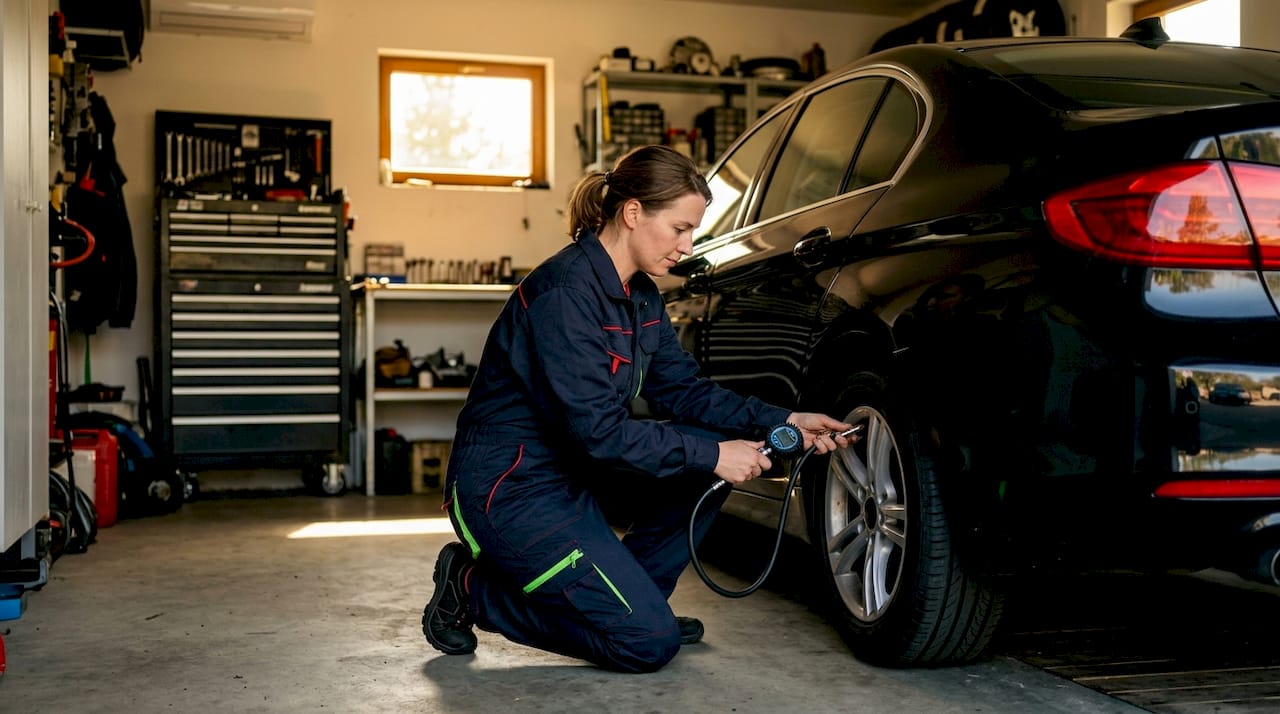
- Tyre pressure checks: A digital gauge and a portable compressor are the only equipment needed. Tyre pressure maintenance directly affects fuel efficiency and tyre lifespan.
Tasks that require jack stands, ramps, or a vehicle lift, such as oil changes and brake inspections, carry higher risk. iFixit and mechanic expert Steve Haney both advise using gloves and eye protection as a minimum for any under-bonnet work. Never work beneath a vehicle supported only by a scissor jack.
Pro Tip: Always consult your vehicle's owner manual before attempting any maintenance task. Manufacturer specifications for fluid grades, filter part numbers, and torque settings vary significantly between models.
How to prepare for a professional car service at home visit
A successful mobile mechanic visit depends on preparation at your end as much as the technician's. The right setup means the job gets done faster, with fewer interruptions, and to a higher standard.
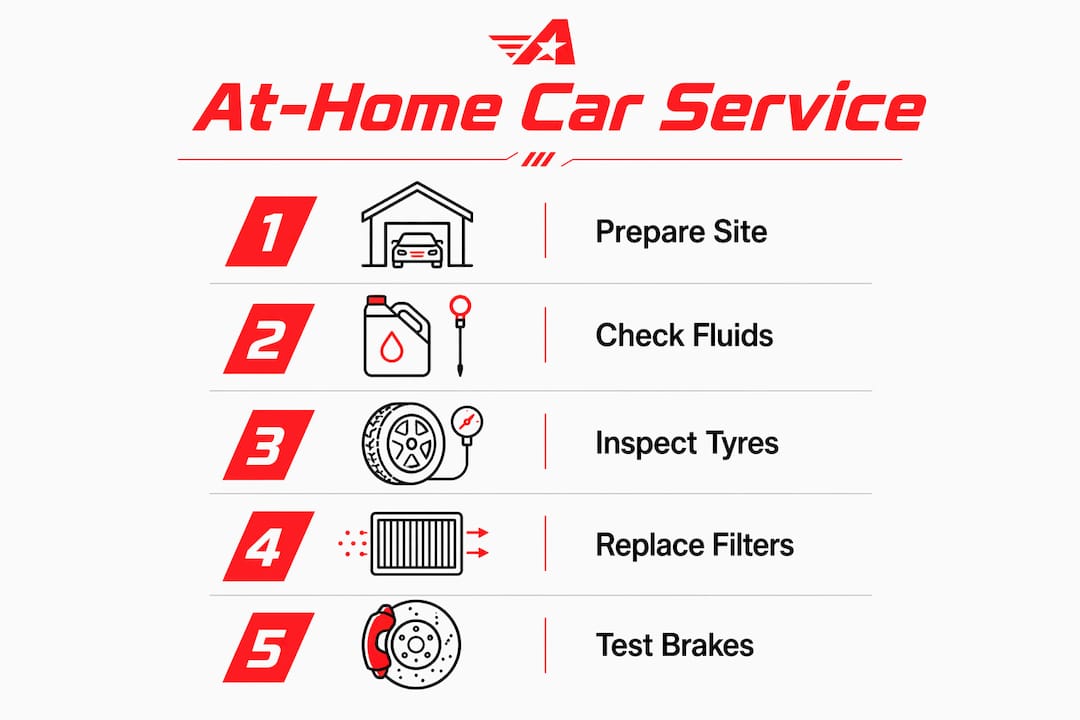
Follow these steps before your mobile mechanic arrives:
- Choose a flat, accessible surface. The vehicle must be on level ground with enough clearance on all sides for the technician to move freely. A driveway or quiet car park works well. Avoid sloped surfaces for any work involving the vehicle being raised.
- Gather your vehicle documents. Have your V5C logbook, service history, and any recent diagnostic reports ready. These help the mechanic confirm the correct parts and service intervals.
- Note down symptoms clearly. Write a brief description of any unusual sounds, warning lights, or handling changes. Specific observations, such as "a grinding noise when braking at low speed," are far more useful than general complaints.
- Confirm the mechanic's credentials. Check that the technician holds relevant qualifications. Astroautomotive employs certified technicians, which matters for both safety and warranty compliance.
- Clear the area around the vehicle. Remove bikes, bins, or garden furniture that could restrict access. Good lighting helps too, particularly for evening appointments.
Car manufacturers recommend servicing based on mileage and time intervals as set out in the owner's manual. Knowing your vehicle's current mileage and last service date before the appointment saves time on the day.
Pro Tip: Take a short video of any warning light or unusual symptom before the visit. A 30-second clip of a dashboard warning or a noise on startup gives the mechanic far more context than a verbal description alone.
Step-by-step overview of common at-home car service procedures
Mobile mechanics and confident DIYers follow the same core procedures for routine vehicle service at home. Knowing what each task involves helps you understand what is being done and spot any shortcuts.
Oil change
Park on level ground and allow the engine to cool for at least 20 minutes. Place a drain pan beneath the sump plug, remove the plug, and allow the old oil to drain fully. Replace the sump plug washer, fit a new oil filter, and refill with the manufacturer-specified grade. Check the dipstick after running the engine briefly.
Tyre pressure check
Remove the valve cap, press the gauge firmly onto the valve stem, and read the pressure. Compare it against the figure in the door jamb sticker or owner's manual. Inflate or deflate as needed. Check all four tyres and the spare.
Brake pad inspection
Remove the wheel to access the calliper. The pad thickness should be visible through the calliper window. Pads worn below 3mm require immediate replacement. This task requires a jack, rated jack stands, and a torque wrench for refitting the wheel.
Bulb replacement
Locate the bulb housing from inside the engine bay or boot. Twist the holder anticlockwise to release it, pull out the old bulb, and press in the replacement. Avoid touching halogen bulbs with bare skin, as oils from your fingers shorten bulb life.
The table below summarises the tools required for each task:
| Task | Tools required | Skill level |
|---|---|---|
| Oil change | Drain pan, socket set, oil filter wrench, funnel | Intermediate |
| Tyre pressure check | Digital gauge, portable compressor | Beginner |
| Brake pad inspection | Jack, jack stands, torque wrench, socket set | Intermediate |
| Bulb replacement | Screwdriver (sometimes none needed) | Beginner |
| Cabin air filter change | None in most vehicles | Beginner |
| Battery swap | Socket set, memory saver (optional) | Beginner |
Common pitfalls to avoid:
- Over-tightening the sump plug, which strips the thread and causes leaks.
- Using the wrong oil grade, which can void manufacturer warranties.
- Forgetting to check tyre pressure when tyres are cold. Heat from driving increases pressure readings artificially.
- Skipping the torque wrench when refitting wheels after brake work.
Troubleshooting and when to call a professional mobile mechanic
DIY maintenance has clear limits. Tasks involving critical safety systems require specialised equipment and qualified mechanics. Attempting complex repairs without the right tools creates safety risks and can invalidate your vehicle's warranty.
Call a professional mobile mechanic when you notice any of the following:
- Brake noise or a soft pedal. Grinding, squealing, or a pedal that sinks toward the floor signals brake system failure. This is not a DIY situation.
- Engine warning lights. A persistent check engine light or multiple dashboard warnings indicate fault codes that need reading with a diagnostic scanner.
- Fluid leaks beneath the vehicle. Oil, coolant, or brake fluid pooling under the car requires immediate professional assessment.
- Suspension knocking or pulling. Uneven tyre wear combined with a vehicle that pulls to one side points to suspension or alignment issues beyond basic home servicing.
- Starting failures. A car that cranks but will not start, or that starts intermittently, often involves fuel system or electrical faults.
OBD-II readers are affordable devices that plug into a port beneath the dashboard and display engine fault codes. They give car owners a useful first look at what a warning light means before booking a service. They do not replace a full diagnostic, but they help you have an informed conversation with your mechanic.
Mobile mechanics can handle a wide range of repairs on-site, from brake replacements to suspension work and engine diagnostics. For Leicestershire drivers, this means professional-grade repairs without the garage wait.
Pro Tip: Keep a record of every fault code your OBD-II reader returns, along with the date and mileage. This log gives any mechanic a clear picture of your vehicle's history and speeds up diagnosis.
Key takeaways
At-home vehicle maintenance works best when routine DIY tasks are combined with professional mobile mechanic visits for safety-critical or complex repairs.
| Point | Details |
|---|---|
| DIY suits routine tasks | Fluid checks, filter changes, and bulb replacements are safe and straightforward for most car owners. |
| Preparation improves results | A flat surface, clear vehicle history, and a written symptom list make mobile mechanic visits faster and more effective. |
| Safety limits DIY scope | Brake work, engine diagnostics, and suspension repairs require certified technicians with specialist tools. |
| OBD-II readers add value | Plugging in a reader before booking a service gives you fault codes and helps avoid unnecessary call-outs. |
| Mobile mechanics cover complex jobs | Professional mobile services handle the full range of repairs, from brake pads to diagnostics, at your location. |
Why I think most drivers underestimate what they can do themselves
Glen here. After years of watching car owners pay for workshop visits they did not need, one pattern stands out clearly. Most drivers assume that anything beyond filling the washer bottle requires a garage. That assumption costs time and money.
Checking your own tyre pressures, swapping a cabin filter, or replacing a blown bulb takes less than 20 minutes with basic equipment. These are not mechanical skills. They are reading skills. The owner's manual tells you exactly what to do. The problem is that most people never open it.
That said, I have also seen the opposite mistake. Drivers who push DIY too far, attempting brake jobs with inadequate jack stands or ignoring persistent warning lights to avoid a call-out fee. The savings evaporate quickly when a stripped sump thread or a brake failure follows.
The sensible approach is a clear division. Handle the routine tasks yourself. Book a certified mobile mechanic for anything involving safety systems, diagnostics, or components you cannot visually inspect. In Leicestershire, that combination gives you the best of both worlds: lower costs on the easy jobs, and professional standards where they genuinely matter.
— Glen
Astroautomotive: professional car servicing at your door
Astroautomotive provides certified mobile car servicing and repairs directly at homes and workplaces across Leicestershire, removing the need for garage visits entirely.
Technicians arrive fully equipped to handle everything from routine oil changes and brake inspections to engine diagnostics and tyre work. Booking is straightforward online, with transparent pricing and no hidden costs. Service packages and monthly plans give car owners flexibility to match their vehicle's needs and budget. Astroautomotive has completed over 1,000 vehicle services with a 99% satisfaction rate. For Leicestershire drivers who value their time, book a mobile service and have a certified technician at your door without rearranging your day.
FAQ
What does car service at home include?
Car service at home covers routine maintenance tasks such as oil changes, fluid checks, filter replacements, and brake inspections, carried out at your driveway or workplace by a certified mobile mechanic. The exact scope depends on the service package booked.
Is it safe to do an oil change at home?
An oil change is safe at home when the vehicle is on level ground, the engine has cooled, and rated jack stands are used if the vehicle needs lifting. iFixit and mechanic experts recommend gloves and eye protection as a minimum.
How do I know if I need a mobile mechanic or can do it myself?
Routine tasks like fluid top-ups, bulb changes, and filter swaps are suitable for DIY. Any job involving brakes, suspension, engine warning lights, or fluid leaks requires a qualified mobile mechanic with specialist equipment.
What is an OBD-II reader and should I own one?
An OBD-II reader is a small device that plugs into a port beneath your dashboard and reads engine fault codes. It is a practical tool for identifying what a warning light means before booking a professional service.
How do I prepare my driveway for a mobile mechanic visit?
Park on flat, level ground with clear access on all sides of the vehicle. Remove any obstacles, have your vehicle documents and service history ready, and write down any symptoms or warning lights you have noticed.